
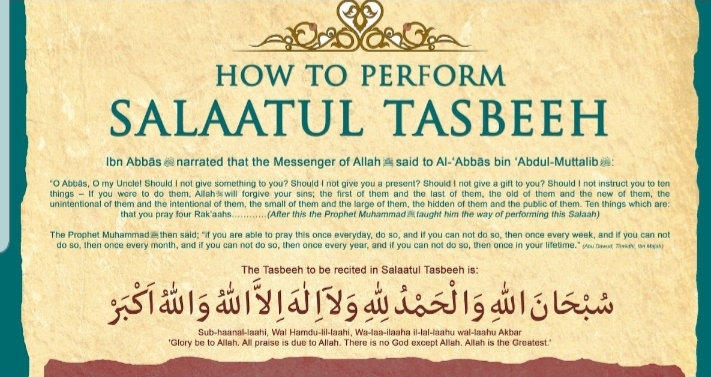
Definition: A nafl (voluntary) prayer taught by Prophet Muhammad ﷺ to his uncle Al‑Abbas ibn Abdul Muttalib.
Structure: 4 rak‘ahs, with 75 tasbih recitations per rak‘ah, totaling 300 tasbihs.
Tasbih Formula: SubhanAllahi wal‑hamdu lillahi wa la ilaha illAllahu wallahu Akbar (Glory be to Allah, praise be to Allah, there is no deity but Allah, and Allah is the Greatest).
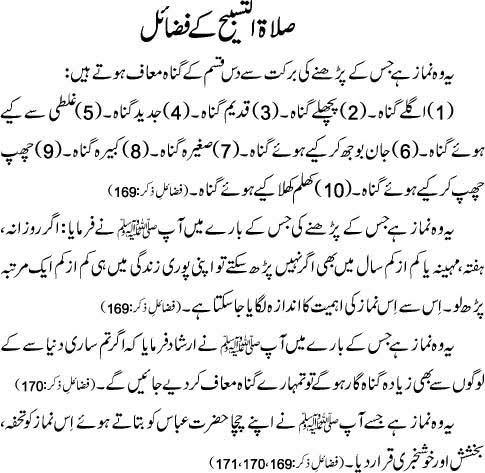
Purpose: To wipe away sins — old and new, hidden and open, intentional and unintentional.
Authenticity of Hadith
Accepted by many scholars: Imam Tirmidhi, Imam Bayhaqi, Imam Suyuti, Hafiz Ibn Hajar, and others considered the hadith sound or hasan.
Criticism: Imam Ahmad ibn Hanbal and Imam Nawawi noted weakness in the chain. Ibn al‑Jawzi even listed it among weak narrations.
Consensus today: Most scholars agree it is permissible and meritorious, though not a confirmed sunnah muakkadah.
How to Perform Salatul Tasbih (Step‑by‑Step)
Each rak‘ah includes 75 tasbihs distributed across positions:
| Position | Tasbih Count | Cumulative Total |
|---|---|---|
| After Thana (before Surah Fatiha) | 15 | 15 |
| In Ruku | 10 | 25 |
| Standing after Ruku | 10 | 35 |
| First Sajdah | 10 | 45 |
| Sitting between Sajdahs | 10 | 55 |
| Second Sajdah | 10 | 65 |
| Sitting briefly before standing | 10 | 75 |
Spiritual Benefits
Forgiveness of sins: Comprehensive cleansing of intentional/unintentional, major/minor sins.
Inner peace: Creates tranquility and focus through abundant dhikr.
Spiritual reset: Recommended daily, weekly, monthly, yearly, or at least once in a lifetime.
Risks & Considerations
Length: Takes 20–30 minutes; requires patience and focus.
Counting challenge: Maintaining 75 tasbihs per rak‘ah can be difficult; digital counters or finger counting may help.
Authenticity debate: While spiritually enriching, one should not pressure others to perform it as obligatory.
Humanized Reflection
Salatul Tasbih is more than numbers — it is a journey of humility. Each tasbih is a whispered reminder of Allah’s greatness, repeated until the heart softens. In Pakistan, many families perform it together on Fridays or special nights like Shab‑e‑Barat, finding comfort in collective remembrance. It is a prayer that slows life down, replacing noise with rhythm: bow, rise, prostrate, sit — each movement filled with glorification.